
World Soil Day: Spotlighting Soil Health Institute brings clarity to the science ‘beneath our feet’
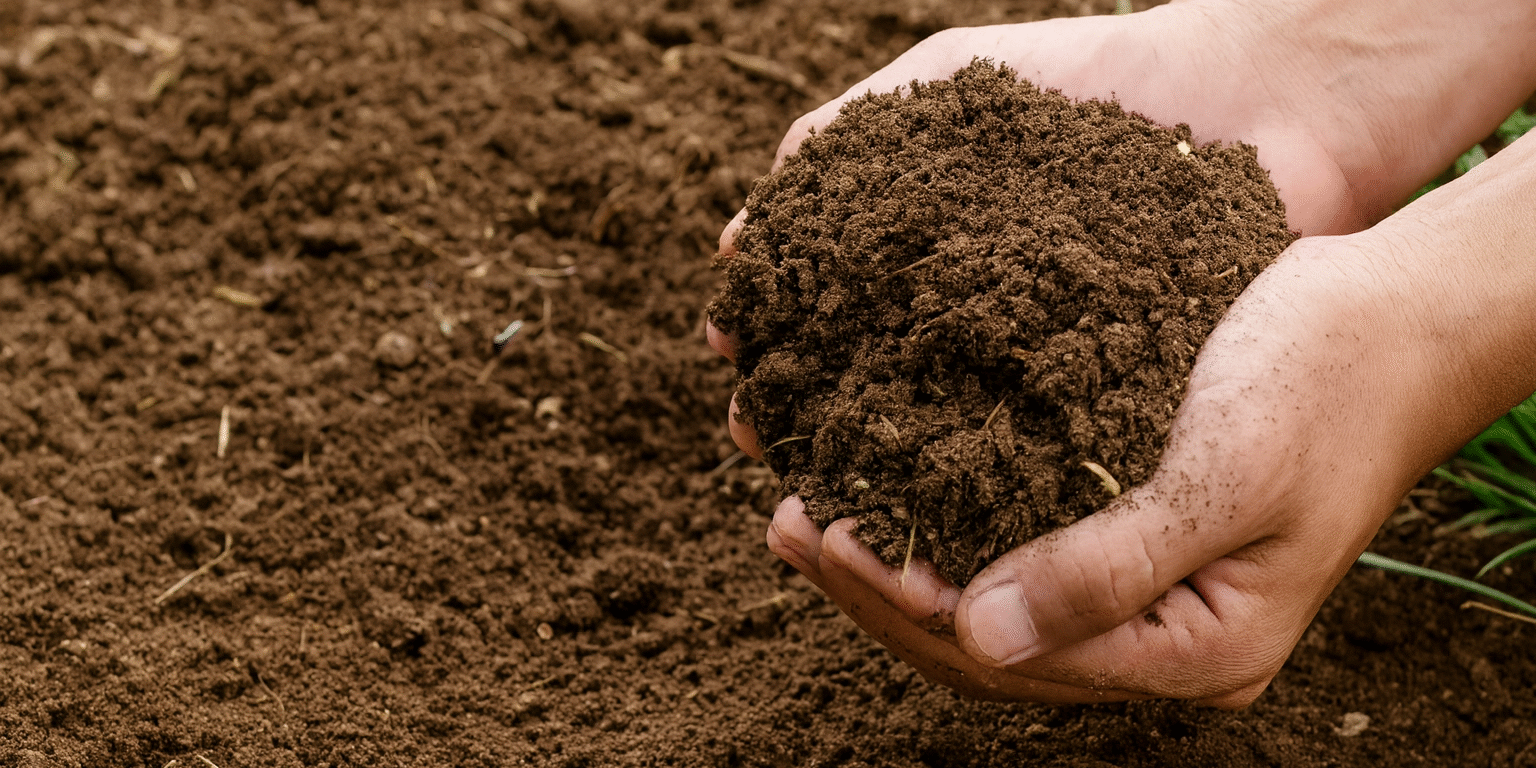
On World Soil Day, we’re reflecting on how the world depends on soils for 95% of our food. Having strong science ‘under our feet’ is essential to building resilient food systems, and our colleagues at the Soil Health Institute (SHI) are helping lead the way. In a learning session he led last month for non-profits working on agri-food transition initiatives, Guelph-based SHI Educator, Cameron Ogilvie, spoke to how soil health has long been a challenging concept to measure. As a science-led nonprofit, SHI has been working for over a decade to evolve ‘soil health’ from a fuzzy term into measures that farmers, advisors, and value-chain partners can better interpret and act on soil assessments.
From fuzzy concept to functional foundation
To understand why measuring soil health has been such a challenge, Cameron encouraged listeners to think about the parallels between human health and soil health. No doctor could assess total well-being with a single test. Similarly, no single soil metric can tell us the whole story about how ‘healthy’ as soil is. Soils, like bodies, are complex biological, chemical, and physical systems whose “vital signs” only make sense when interpreted together.
And what does a “healthy” soil look like?
Cameron offered: “We think of soils as being healthy when they are providing all the functions we rely on them for”.
From cycling water and nutrients, to regulating pests and diseases, providing physical stability, filtering pollutants, and hosting beneficial organisms, a healthy soil is a soil that can support these functions – to the extent that their innate properties, like soil texture, will allow.
This functional view is the backbone of SHI’s work and the reason their science resonates widely across the agri-food sector among those seeking practical, reliable ways to build resilience.
Building data for action
SHI has been leading one of the most ambitious soil-health studies in North America: the North American Project to Evaluate Soil Health Measurements (NAPESHM). Working across 124 long-term experimental sites in Canada, the U.S. and Mexico, the team evaluated more than 30 soil measurements to identify which ones truly matter.
Their filtering criteria were simple but bold: sensitive to management, scalable across regions, and accessible and low-cost for labs and land managers. This led to a suite of four essential indicators that together provide a consistent, functional picture of soil health:
- Soil organic carbon
- Carbon mineralization potential
- Aggregate stability
- Available water holding capacity
From there, SHI built tools to make these indicators usable in the real world. The Slakes smartphone app lets growers assess aggregate stability directly in the field, with no lab required. And through regional benchmarking efforts, designed as a community-based system where every new participant strengthens the dataset, SHI helps farmers compare their results to local reference soils and better understand how their soils could improve.
Why SHI’s work matters for the sector
For producers trying to build resilience in the face of drought, unpredictable weather, and rising input costs, clear and actionable soil health metrics are a key tool. SHI’s work bridges science and practice: it equips everyone, from farmers to advisors to supply-chain partners, with a shared language, stronger tools and more reliable ways to track regenerative progress.
FoodBridge recognizes and appreciates the work being done by SHI and other global partners advancing soil health science and practice on this World Soil Day.