
The Secrets of Rye Series, Part 1 –What if hybrid rye became your third crop?
By Nadine Bachand
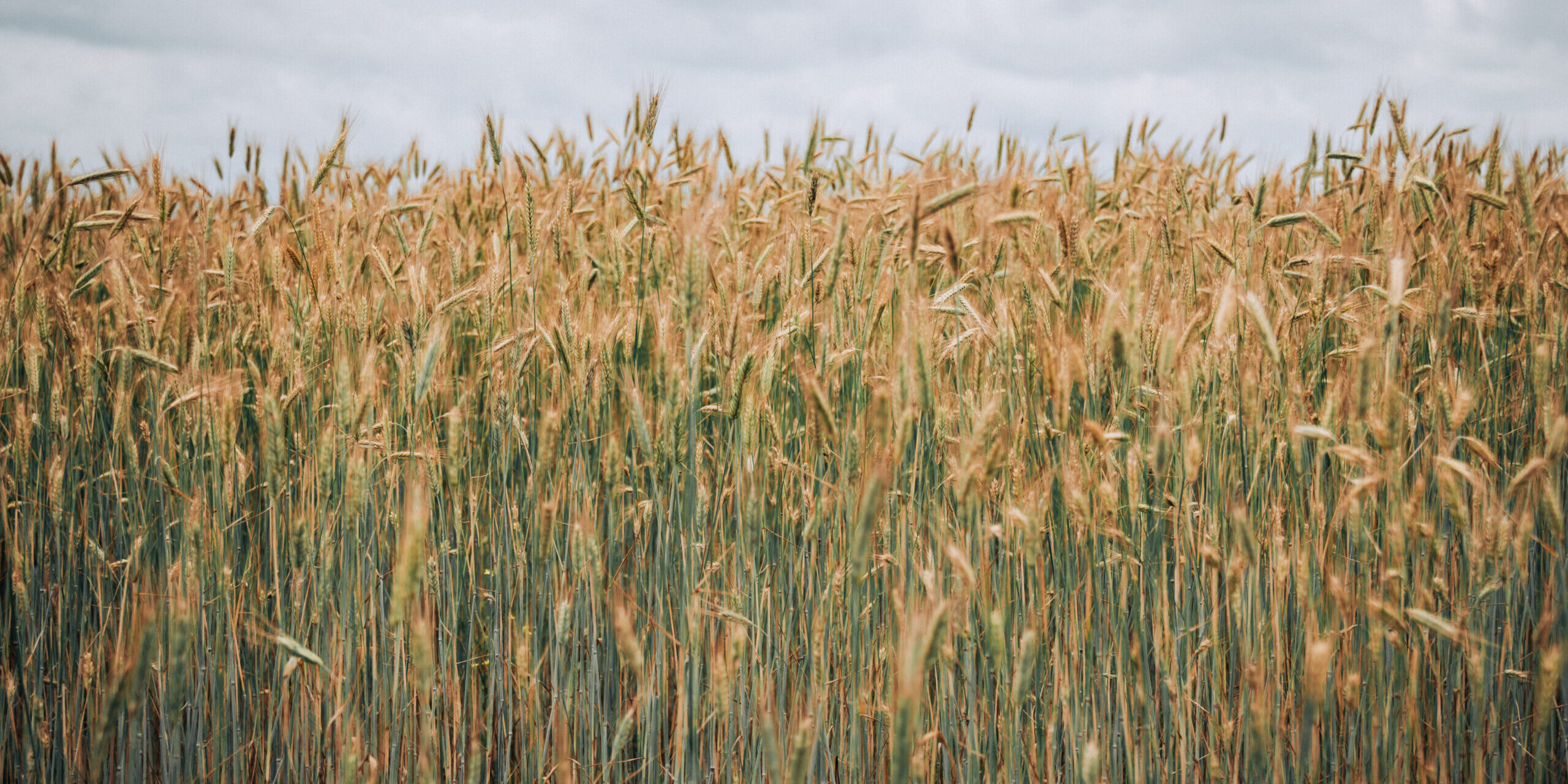
For years, rye remained relatively under the radar in Quebec’s agricultural landscape. Yet recently, it has been coming up more and more often in conversations among farmers. Why? Because it addresses several issues that are top of mind today: diversifying corn-soybean rotations, better protecting soils, spreading fieldwork more evenly throughout the season, and, increasingly, because a market is beginning to take shape.
At FoodBridge, interest has grown enough that we launched a farmer cohort in the Mauricie region this summer focused on winter hybrid rye.
More than yield
When farmers are asked why they are interested in hybrid rye, yield is rarely the first thing they mention. Instead, they talk about what the crop allows them to do: harvest earlier, establish a cover crop, apply manure under better conditions, break up the corn-soybean rotation, improve weed control and make use of the straw. In other words, rye provides greater flexibility.
Of course, yield still matters. Under good conditions, hybrid rye can produce around 7 t/ha. But when farmers are getting familiar with the crop, or when soils are less suitable, many consider yields of 5 to 6 t/ha to be a more realistic target.
A crop that is sparking curiosity
Within the cohort, some farmers have been growing rye for several years and are now looking to transition to hybrid varieties. Others have never grown rye before but want to test a new option in their rotation. Some see it primarily as a way to reduce weed pressure, while others are looking for better winter survival than winter wheat. For many, the value of the straw is another attractive benefit.
In short, everyone comes with their own objectives, but they are all looking for the same thing: a more resilient crop rotation.
The market: a key piece of the puzzle
If there is one topic that comes up in nearly every conversation, it is the question of market opportunities. Farmers are willing to try hybrid rye, but they want to know who they will be able to sell it to.
That is precisely the goal of FoodBridge’s approach: to support farmers from an agronomic perspective while also building connections with feed manufacturers, buyers and the swine sector so that production develops alongside a real market. Because a promising crop has a much better chance of becoming established when it is part of a well-structured value chain.
In the next article in our Secrets of Rye series, we will take a closer look at this emerging supply chain and explore why the swine sector is becoming increasingly interested in hybrid rye.
-
- Part 2 — Who will buy the rye? Behind the scenes of an emerging Quebec value chain
- Part 3 — From Quebec to Ontario: why hybrid rye is gaining ground