
Phosphorus in the Great Lakes: A $272 Million Challenge
FoodBridge is collaborating on projects in Ontario where improving water quality in the Great Lakes region is at the forefront.
By Linsey Van Koppen
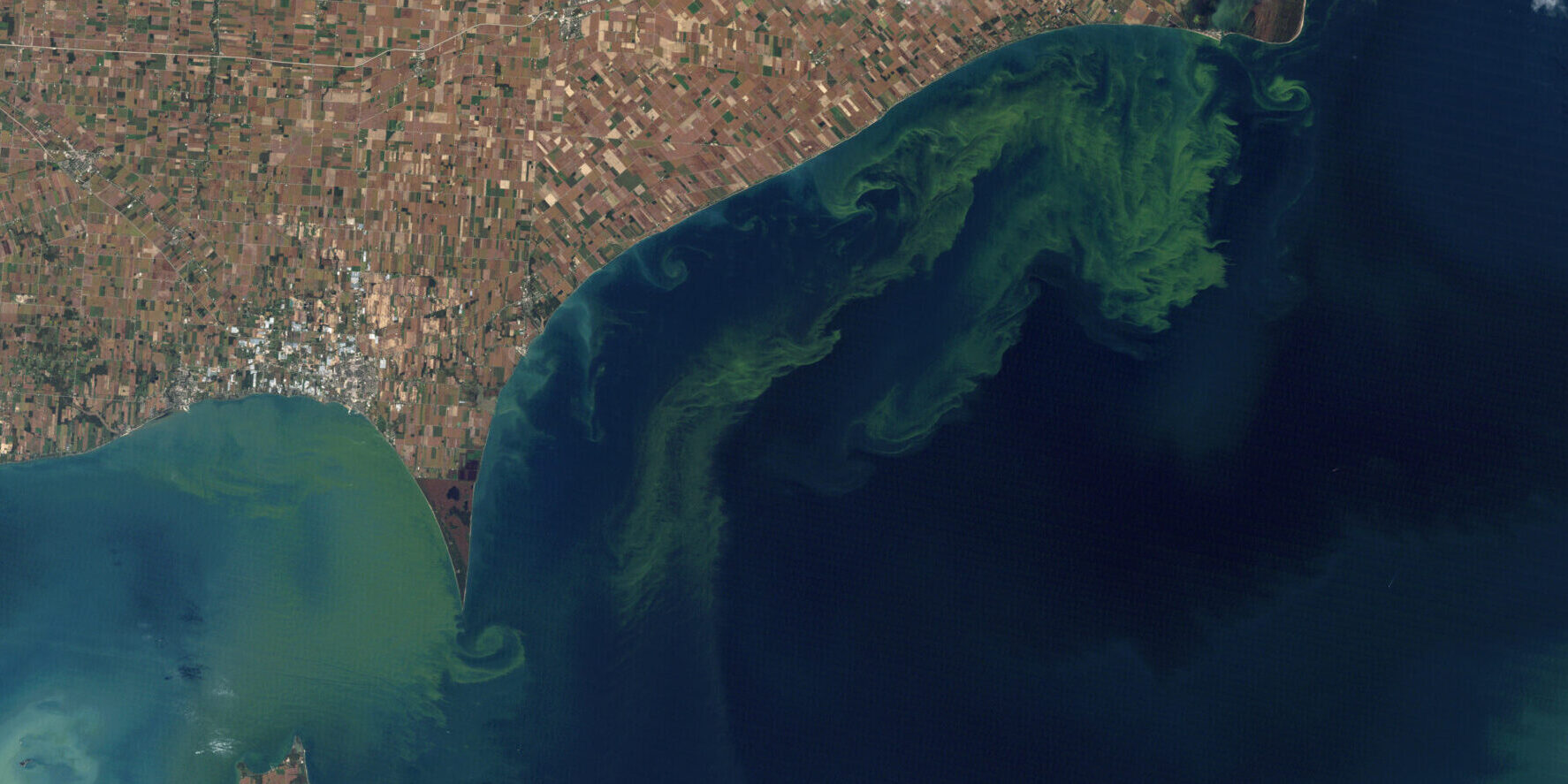
Reducing excess nutrients, and namely, non-point sources of phosphorus has long been a major focus for preventing harmful algal blooms in the Great Lakes. One of the contributing sources is phosphorus applied as fertilizer to agricultural fields, which can be lost from soil and enter surrounding waterways through runoff and soil erosion. While progress has been made at reducing phosphorus loading, warming temperature, legacy phosphorus, and more unpredictable weather patterns from climate change are making this an increasingly difficult challenge to address. The recently released 2025 State of the Great Lakes report highlights that harmful algal blooms in the western basin of Lake Erie continue to be a significant concern.
Nutrient losses are a shared issue
For grain farmers, fertilizer costs continue to be one of the largest input expenses, and when nutrients are lost through runoff or erosion, they aren’t benefiting crop production. Improving nutrient use efficiency therefore benefits both farm profitability and supports healthier watersheds.
Beyond the farm, excess nutrients have far-reaching consequences. Harmful algal blooms can increase drinking water treatment costs, impact commercial and recreational fisheries, reduce property values along shorelines, and discourage tourism and recreation. The estimated cost of algal blooms in the Canadian Lake Erie basin alone is estimated to be $272 million annually if left unchecked. Municipalities, businesses and taxpayers ultimately share many of these costs, demonstrating that nutrient management is a shared societal challenge rather than solely an agricultural issue.
What is being done?
Researchers and conservation organizations have identified a wide range of beneficial management practices (BMPs) that can help reduce nutrient losses while supporting soil health. Implementation of these practices is not straightforward. Every farm is different, and practices that work well in one location may not produce the same results elsewhere. Farmers must balance agronomic performance, equipment requirements, labour availability, weather risk, and most importantly, what makes sense for their bottom line when deciding which BMPs to adopt.
To help farmers make these decisions, speed up adoption of conservation practices, and identify the most effective ways to improve water quality, we need a systems approach: better landscape-level monitoring to learn which practices work best under different conditions, coordination of existing support and education programs to maximize current efforts, and diverse partners who can find new ways to engage and support farmers. This cannot be accomplished by one organization alone. By connecting farmers, researchers, conservation organizations, governments, and supply-chain partners, we can align efforts, fill gaps, and develop practical approaches that make conservation worthwhile for farmers while showing the public that investments deliver measurable results. Though this work demands significant resources and expertise, it is essential to keeping phosphorus on fields and out of waterways.
Systems approaches
FoodBridge is working to do just that through two collaborative projects.
Watershed-scale action. With The Nature Conservancy / Nature United and other partners, FoodBridge is helping build a collaboration-based initiative in Lake Erie watersheds, connecting current programming organizations, research, funding, and supply chain partners to reach beyond current levels of adoption and deliver measurable results.
Unlocking finance. With Ontario Soil Network, Environmental Defense Fund, and Farm Credit Canada, FoodBridge is piloting the use of agricultural finance as an additional solution that address the capital and risk barriers that farmers in Southwestern Ontario face when adopting BMPs, designed to complement existing supply chain programs, including those from partners like PepsiCo.
Looking Ahead
Both projects are actively seeking agri-food supply chain partners to help scale their impact. As companies look to reduce their environmental footprint, there’s a real opportunity to link sustainable sourcing investment directly to farmer-led water quality outcomes. Protecting the Great Lakes is a shared responsibility that depends on farmers, but also on continued collaboration across government, researchers, conservation groups, and industry.